01 The Core Role of the Water Pump Assembly in the Engine
The Caterpillar engine cooling system utilizes a water pump driven by a gear train on the right side of the lower front end of the engine. Coolant is drawn from the radiator or other heat exchanger into the coolant inlet at the center of the water pump by the rotation of the water pump impeller.
The water pump assembly is a core component of the engine cooling system. The rotation of the impeller generates centrifugal force, circulating coolant through the cylinder block, cylinder head, and radiator, ensuring the engine maintains optimal operating temperature (80°C-95°C).
In Caterpillar engines, the coolant flow is split at the water pump outlet. One portion is sent to the front of the cylinder block through a water pipe, while the other portion flows through the engine oil cooler. This sophisticated flow splitting design ensures uniform cooling of all critical engine components.
Without an efficient water pump assembly, the engine will not be able to effectively control operating temperature, potentially leading to severe overheating or even permanent damage.
02 Design Features of the Caterpillar 416-0610 Water Pump Assembly
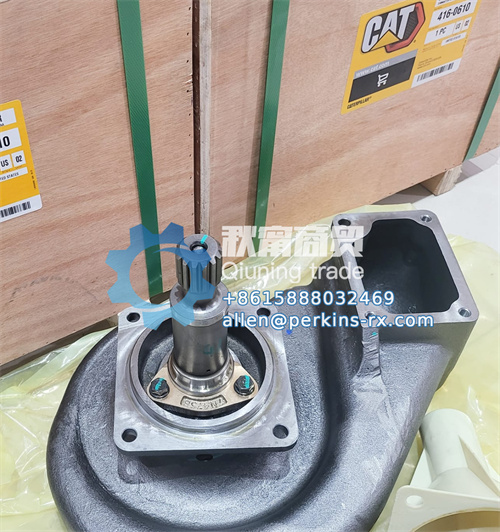
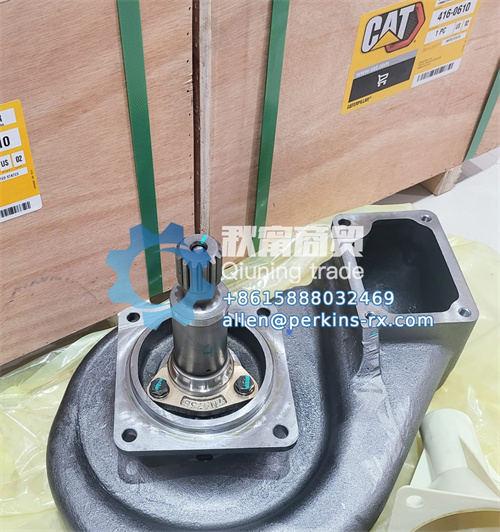
The Caterpillar 416-0610 engine case water pump assembly features a structure specifically designed for heavy-duty applications. Compared to conventional water pumps, it incorporates additional engineering features tailored to the specific needs of Caterpillar engines.
The water pump has a compact, circular structure, and its casing is typically constructed of high-strength materials. This makes it lightweight, while also offering excellent heat dissipation and corrosion resistance, making it suitable for a variety of harsh operating environments.
The pump's internal components include the impeller, pump shaft, casing, water seal, and bearings. The impeller is the core component of the water pump, featuring multiple curved blades whose shape and angle are carefully designed to efficiently drive the coolant flow as it rotates.
The pump shaft is constructed of high-strength alloy steel, providing sufficient strength and rigidity to withstand the substantial torque transmitted by the engine and ensure stable, high-speed rotation of the impeller.
The water pump casing not only houses the various components but also plays a crucial role in directing the coolant flow. The housing features a unique flow channel that allows coolant to flow smoothly from the inlet to the outlet under the impeller's control, reducing flow resistance and improving cooling efficiency.
03 Common Troubleshooting and Solutions
Based on industry maintenance case data, common faults with Caterpillar engine water pump assemblies mainly fall into the following categories:
Coolant leakage (accounting for approximately 45%) is often caused by seal aging or improper installation. Long-term operation under high temperature and high pressure causes seals to gradually harden and lose their elasticity, ultimately causing coolant to leak from the shaft seal.
This leakage not only reduces coolant flow but can also cause engine overheating and even damage adjacent components.
Bearing noise (accounting for approximately 30%) typically manifests as unusual noise during operation of the water pump. If accompanied by a high-temperature alarm, the machine should be shut down and inspected immediately.
Bearing noise is often caused by lack of lubrication or wear of the bearings. If left untreated, it can cause the water pump to seize, leading to serious engine failure.
Impeller corrosion is common in equipment using inferior coolant. A case at a mining area in Shandong Province showed that mixing different brands of coolant caused the impeller to perforate within three months. A corroded impeller reduces water pump efficiency, leading to insufficient engine cooling and gradual overheating.
To diagnose a water pump failure, follow these steps:
Visual Inspection: Inspect the water pump surface for signs of coolant leakage and the housing for cracks or corrosion.
Auditory Inspection: Start the engine and listen for any unusual noises near the water pump.
Performance Test: Check coolant circulation. You can determine circulation effectiveness by feeling the temperature difference between the upper and lower radiator pipes.
Bearing Inspection: Remove the belt and manually rotate the water pump pulley to check for binding or unusual noises.
 04 Proper Maintenance Practices for the Water Pump Assembly
To ensure long-term, stable operation of the Caterpillar 416-0610 water pump assembly, the following maintenance measures are recommended:
Regularly check the coolant quality. Use a mixture of 50% pure water and 50% permanent antifreeze, and add 3-6% concentrated anti-corrosion agent. Avoid mixing coolants from different brands to prevent chemical reactions that can cause impeller corrosion.
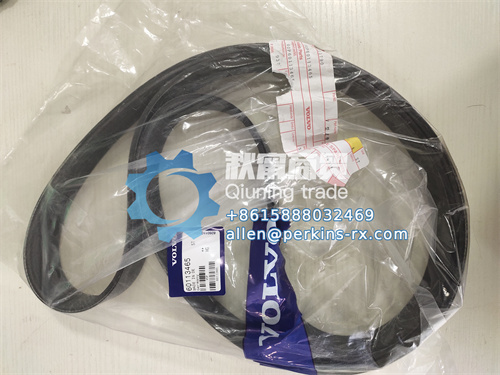
Replace the seal kit every 5,000 hours and use genuine antifreeze. Regularly check the belt tension and belt groove wear, as a poorly functioning belt can affect water pump speed and flow.
Establish a three-tiered maintenance system: daily inspection (observation for leaks), quarterly performance testing (flow meter testing), and annual disassembly and maintenance. Lubricate and maintain the water pump bearings during seasonal replacements (if applicable).
The water temperature regulator is a critical component in the cooling system. When necessary, it allows coolant flow to be diverted to the heat exchanger and the water pump's internal bypass line for proper temperature regulation.
Without a water temperature regulator in the cooling system, there is no mechanical control, allowing coolant to bypass the bypass line and flow directly into the path of less resistance, causing engine overheating.
05 The Importance of Selecting Genuine Parts
When selecting a Caterpillar 416-0610 water pump assembly, it is strongly recommended to use genuine parts. Original equipment parts (such as Part No. 416-0610) come with a 12-month warranty, ensuring perfect engine fit and optimal performance.
While lower-priced alternatives are available on the market, such as Taiwanese subcontractors (priced approximately 60% of the original equipment price) or domestically produced imitation parts (as low as 20% of the original equipment price), actual use has shown that these aftermarket parts often have a lifespan of less than 2,000 hours, and the average annual maintenance cost of using aftermarket parts can exceed that of original equipment parts by 15% due to the increased risk of associated failures (such as cylinder head deformation).
A comparative test conducted by a logistics company showed that the average annual maintenance cost of using aftermarket parts exceeded that of original equipment parts by 15% due to the increased risk of associated failures (such as cylinder head deformation). For critical equipment, prioritizing parts from original equipment channels can reduce the risk of unplanned downtime and improve overall equipment reliability.
For used equipment or those with limited budgets, consider certified refurbished parts. These parts have been professionally inspected and reconditioned, offering performance close to that of original equipment parts at a more reasonable price.
The Caterpillar 416-0610 engine case water pump assembly comes with a unified global warranty, ensuring you receive professional after-sales support regardless of your region.
If you have further questions about the Caterpillar 416-0610 engine case water pump assembly or would like to purchase one, please contact us via the following methods:
Email: allen@perkins-rx.com
Website: http://www.cnqn.net/
WhatsApp/WeChat: +8615888032469
04 Proper Maintenance Practices for the Water Pump Assembly
To ensure long-term, stable operation of the Caterpillar 416-0610 water pump assembly, the following maintenance measures are recommended:
Regularly check the coolant quality. Use a mixture of 50% pure water and 50% permanent antifreeze, and add 3-6% concentrated anti-corrosion agent. Avoid mixing coolants from different brands to prevent chemical reactions that can cause impeller corrosion.
Replace the seal kit every 5,000 hours and use genuine antifreeze. Regularly check the belt tension and belt groove wear, as a poorly functioning belt can affect water pump speed and flow.
Establish a three-tiered maintenance system: daily inspection (observation for leaks), quarterly performance testing (flow meter testing), and annual disassembly and maintenance. Lubricate and maintain the water pump bearings during seasonal replacements (if applicable).
The water temperature regulator is a critical component in the cooling system. When necessary, it allows coolant flow to be diverted to the heat exchanger and the water pump's internal bypass line for proper temperature regulation.
Without a water temperature regulator in the cooling system, there is no mechanical control, allowing coolant to bypass the bypass line and flow directly into the path of less resistance, causing engine overheating.
05 The Importance of Selecting Genuine Parts
When selecting a Caterpillar 416-0610 water pump assembly, it is strongly recommended to use genuine parts. Original equipment parts (such as Part No. 416-0610) come with a 12-month warranty, ensuring perfect engine fit and optimal performance.
While lower-priced alternatives are available on the market, such as Taiwanese subcontractors (priced approximately 60% of the original equipment price) or domestically produced imitation parts (as low as 20% of the original equipment price), actual use has shown that these aftermarket parts often have a lifespan of less than 2,000 hours, and the average annual maintenance cost of using aftermarket parts can exceed that of original equipment parts by 15% due to the increased risk of associated failures (such as cylinder head deformation).
A comparative test conducted by a logistics company showed that the average annual maintenance cost of using aftermarket parts exceeded that of original equipment parts by 15% due to the increased risk of associated failures (such as cylinder head deformation). For critical equipment, prioritizing parts from original equipment channels can reduce the risk of unplanned downtime and improve overall equipment reliability.
For used equipment or those with limited budgets, consider certified refurbished parts. These parts have been professionally inspected and reconditioned, offering performance close to that of original equipment parts at a more reasonable price.
The Caterpillar 416-0610 engine case water pump assembly comes with a unified global warranty, ensuring you receive professional after-sales support regardless of your region.
If you have further questions about the Caterpillar 416-0610 engine case water pump assembly or would like to purchase one, please contact us via the following methods:
Email: allen@perkins-rx.com
Website: http://www.cnqn.net/
WhatsApp/WeChat: +8615888032469