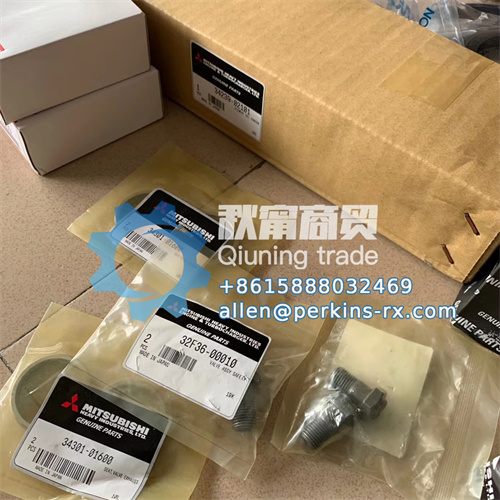
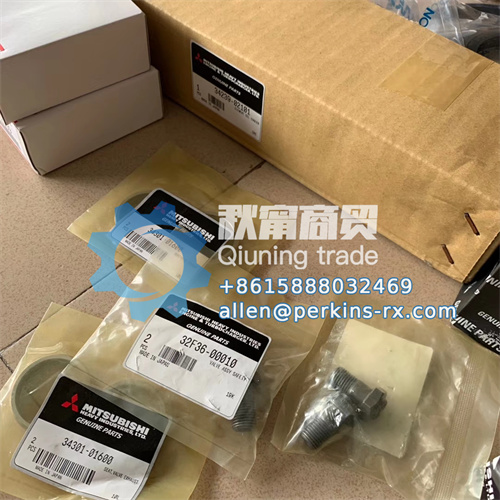
The "sealing cornerstone" of the combustion chamber - Mitsubishi valve seat ring 34301-01600
The valve seat ring is the "connection point" between the engine's valve mechanism and the cylinder head. Despite its small size, it plays a crucial role in sealing the combustion chamber in high-temperature and high-pressure environments. Its performance directly affects the stability of the engine's cylinder pressure and combustion efficiency. Mitsubishi valve seat ring 34301-01600, with its original factory-level quality and precise design, has become a reliable choice to ensure this core link. Its core value lies in the deep combination of "precise fit" and "high-temperature tolerance".
As an original Mitsubishi component, the size and curvature of the 34301-01600 are perfectly matched with the cylinder head valve holes (for specific compatible models, please consult customer service). From the inner diameter of the seat ring to the interference fit with the cylinder head, all have undergone tens of thousands of tests by the original factory to ensure a "perfect fit" with the valve conical surface. Unlike the possible problem of poor fit of general seat rings, it can maintain a stable seal under the dual effects of high-frequency valve opening and closing (over a thousand times per minute) and the combustion chamber temperature exceeding 1000℃ - this is the key to avoiding "air leakage" Once the seal fails, high-pressure gas will leak through the gap, causing a drop in cylinder pressure, power attenuation, and even more serious malfunctions due to local high-temperature erosion of the valves and seat rings.
Material and craftsmanship are the core elements that enable it to withstand "extreme tests". It adopts high-chromium heat-resistant alloy and adds elements such as molybdenum and nickel to enhance high-temperature stability, which can resist the corrosion of combustion chamber gas (including sulfides and nitrogen oxides) and the high-frequency friction of the valve conical surface for a long time. Precision boring processing ensures that the surface finish of the seat ring reaches the micron level, and the fit with the valve exceeds 99%. Even when the engine is operating at high load for a long time (such as heavy climbing and continuous high speed), it can still stably play a sealing role, reducing power loss and carbon deposit formation caused by air leakage.
For engines, stable valve seat ring performance holds multiple values: good sealing leads to complete combustion and higher fuel utilization. If the gas does not leak out, the cylinder pressure will be stable, the engine will idle more smoothly and accelerate more powerfully. Less wear leads to a longer service life of the valves and seat rings, reducing the frequency of major overhauls. For the refurbishment or maintenance of old engines, replacing the original factory seat rings is the key to "protecting the big with the small" - compared with the damage to valves and cylinder heads caused by air leakage, the investment in original factory parts can significantly reduce the long-term maintenance cost.
Maintenance suggestion: It is recommended to replace the valve or cylinder head simultaneously during maintenance. It should be pressed and installed by a professional technician in accordance with the original factory specifications to ensure a firm bond between the seat ring and the cylinder head. Before installation, it is necessary to clean the carbon deposits and impurities in the seat ring holes to avoid affecting the sealing effect due to unclean mating surfaces.