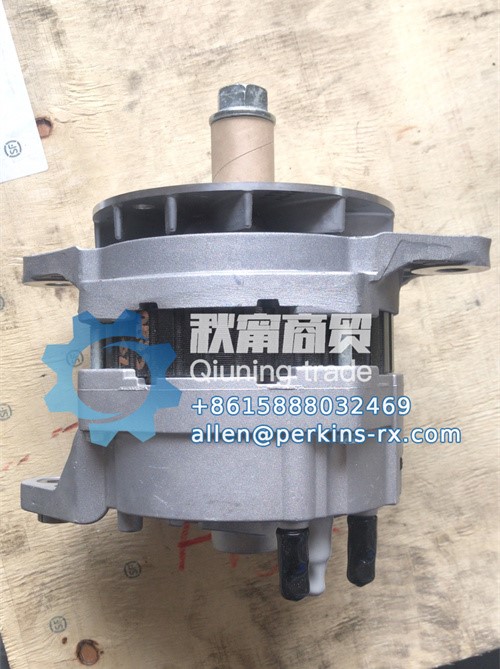
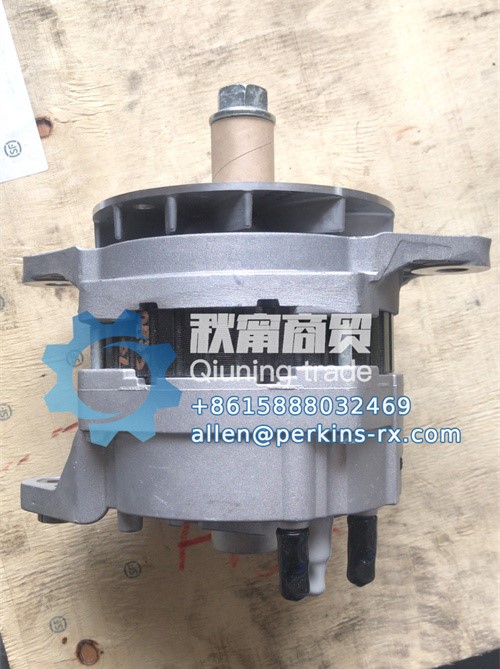
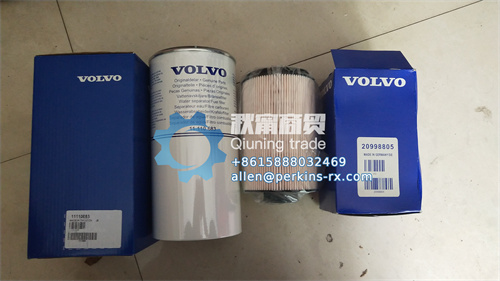
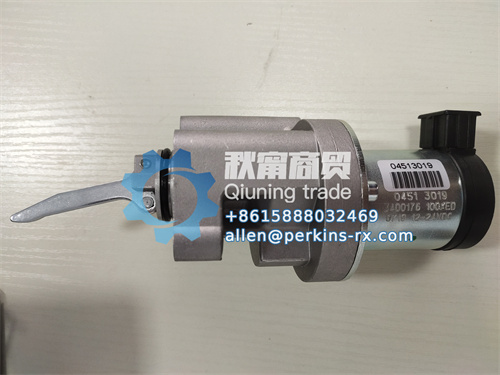
The "energy replenishment station" of the equipment's power system - Perkins Charger 2506CE15TAG2CH11087
During the operation of the engine, the charger serves as a "bridge" connecting mechanical power and the electrical system. The stability of its charging directly determines the lifespan of the battery and the reliability of on-board equipment. The Platinum 2506CE15TAG2CH11087 charger, with its core features of "original factory-level precise matching" and "scenario-based durable design", has become a key power supply device in complex environments. Its value lies not only in "charging" but also in the dual role of "voltage stabilization and protection system".
As an original parts of Perkins, its interface and voltage parameters are fully matched with the 2506CE15TAG2 engine and battery system. From the terminal block specifications to the charging voltage threshold (13.8-14.5V), all have been tested and calibrated by the original factory to avoid the common "overcharging" or "undercharging" problems of general chargers: overcharging can cause battery swelling and electrolyte evaporation, while undercharging leads to battery loss of power, affecting startup and equipment operation. Original factory compatibility ensures that the charging process is always "replenished as needed", extending the battery's cycle life by more than 40%.
Its core advantage lies in the "anti-interference and vibration resistance design". The charger housing is made of high-strength die-cast aluminum, with an impact resistance 30% higher than that of ordinary steel. It can withstand the high-frequency vibration during the bumpy operation of construction machinery (with an amplitude of up to 2mm and still running stably). An electromagnetic shielding layer is added to the internal circuit to reduce electromagnetic interference from the engine ignition system and motor, and to prevent fluctuations in charging current from affecting on-board electronic devices (such as ECUs and sensors). Even in dusty construction sites, damp machine rooms and other scenarios, it can still maintain stable output, and the failure rate is 60% lower than that of counterfeit parts.
The hidden value of the equipment lies in the "power chain protection" : stable charging keeps the battery fully charged at all times, preventing the starter motor from overloading due to insufficient power during cold starts. The voltage stabilizing output protection circuit is protected from voltage surges, reducing the risk of burning out equipment such as vehicle lights and instrument panels. If the charger fails, at the very least, the equipment will frequently be discharged and shut down; at worst, the battery will be scrapped and the circuit will be damaged, resulting in a significant increase in maintenance costs.
Maintenance suggestions: It is recommended to check every 800 hours whether the wiring of the charger is loose and whether the casing is damaged. Clean the surface dust to prevent poor heat dissipation. When you find that the charging indicator light is abnormal (flashing or not lighting up), replace it in time. When replacing, use original factory parts to ensure that the parameters match those of the engine and battery.