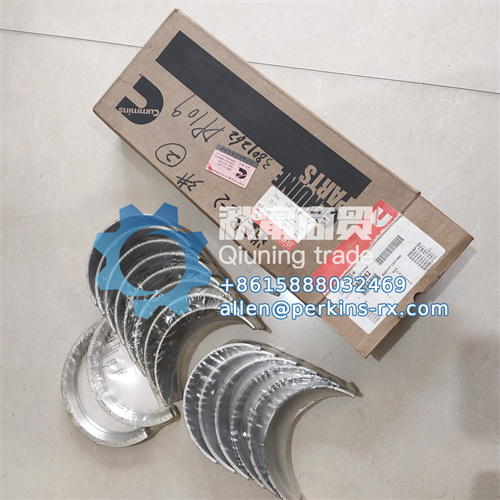
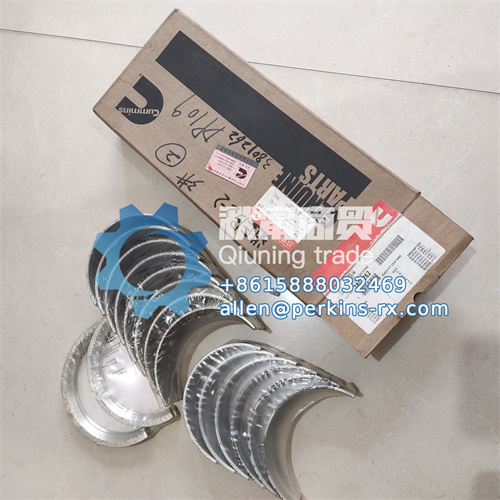
Repair pad for engine shaft system - Cummins NTA855 enlarged tile 3801262
In the connection between the engine crankshaft and cylinder block, the bearing shell is the "key buffer layer" that disperses pressure and reduces friction, and the enlarged tile is specially designed for the repaired (journal wear machining) shaft system. Its fitting accuracy directly determines the journal life and operational stability. Cummins 3801262 enlarged tiles, with "original factory level repair adaptation" and "anti-wear bearing characteristics" as the core, have become a reliable choice for heavy-duty equipment shaft repair. Their value lies not only in "replacing worn parts", but also in the dual role of "precise repair and prolonging shaft life".
As an original Cummins accessory, its thickened size and alloy composition perfectly match the NTA855 engine journal repair standard (specific adaptation scenarios can be consulted with customer service). The bonding surface, which has been precision ground by the original factory, has a contact area of over 98% with the processed shaft neck, avoiding the "local excessive stress" (causing overheating of the shaft neck) or "uneven gap" (producing abnormal noise and exacerbating wear) caused by size deviation of the universal enlarged tile. This "exclusive adaptation" restores the original factory level operational accuracy of the repaired shaft system, eliminating secondary damage caused by improper repair from the source.
The core process focuses on wear resistance and load-bearing capacity: using high tin aluminum alloy material (with a tin content of 10% -12%), the surface hardness reaches HB35-45, and the wear resistance is 40% higher than ordinary Babbitt alloy; The back is treated with phosphating to enhance the friction with the bearing seat (preventing sliding during operation) and maintain a stable fit during high-frequency engine vibration. Thickened design (0.25-0.5mm thicker than standard tiles) accurately compensates for journal wear, restoring the fit clearance between the crankshaft and bearing to the ideal range of 0.05-0.08mm, ensuring even distribution of oil film (reducing dry friction).
The implicit value is reflected in the long-term protection after repair: uniform load-bearing reduces the wear rate of the journal by 60%, and extends the interval between engine major repairs by 50%; Anti impact characteristics (adapted to sudden acceleration of loaders and torque fluctuations caused by sudden directional changes of excavators) reduce the risk of bearing shell cracks; When adapting to old engines (with slightly elliptical shaft necks), precise fitting can be used to correct operating deviations and reduce the risk of crankshaft fracture. If the tiles are not properly adapted, it can result in engine noise and abnormal oil temperature rise, and in severe cases, shaft neck erosion, crankshaft scrap, and a sharp increase in maintenance costs.