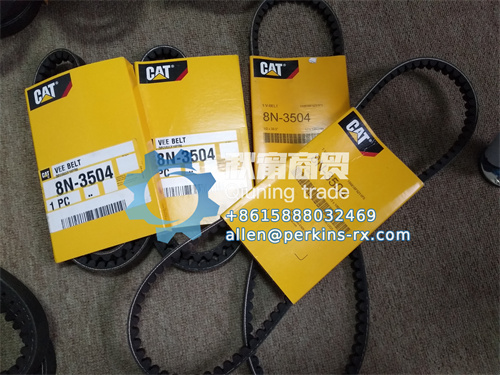
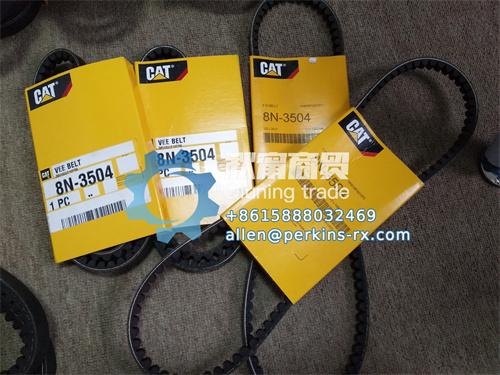
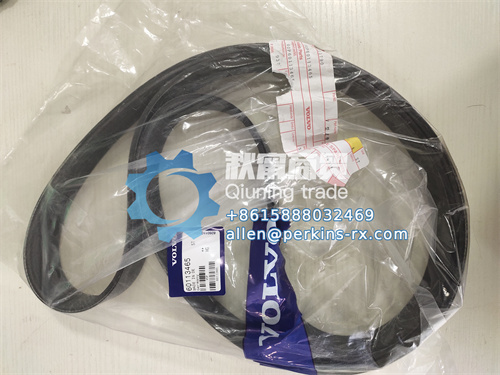
The "power transmission link" for equipment cooling - fan belt 8N-3504
In the equipment cooling system, the fan belt is the "core transmission component" that connects the engine and the cooling fan. Its transmission stability directly determines the fan speed, heat dissipation efficiency, and engine temperature control. The 8N-3504 fan belt, with "original factory level transmission adaptation" and "extreme working condition toughness characteristics" as its core, has become a reliable transmission guarantee for heavy-duty equipment. Its value lies not only in "transmitting power", but also in its key role of "stable heat dissipation and anti shutdown".
As an original accessory, its length, cross-sectional dimensions, and pulley groove are perfectly matched (specific compatible models can be consulted with customer service). The elasticity coefficient optimized by the original factory tension test ensures that the transmission slip rate is ≤ 1% when the engine speed fluctuates (from idle to full load), avoiding "transmission lag" (insufficient fan speed, engine overheating) or "excessive tension" (increased bearing wear) caused by size deviation of the universal belt. This precise adaptation synchronizes the fan and engine speed, eliminating equipment shutdown caused by insufficient heat dissipation from the source (commonly seen in high-temperature operations in summer).
Material focus full scene resistance: neoprene base (oil stain resistance and aging resistance increased by 40% compared with ordinary rubber), built-in high-strength polyester fiber cord (tensile strength up to 15MPa), and surface layer treated with wear-resistant coating (reducing friction loss with pulley). It can withstand extreme cold of -40 ℃ (not hardened in northern winter) and high engine compartment temperature of 120 ℃ (not softened during continuous operation in summer), and maintain stable tension even under high-frequency vibrations of construction machinery (such as loader bumps), avoiding abnormal noise and gear jumping caused by belt looseness.
The implicit value is reflected in the continuous operation guarantee: stable transmission keeps the fan's heat dissipation efficiency above 95% (the engine temperature is controlled within the ideal range of 85-95 ℃); Wear resistance characteristics extend the replacement cycle to 1.5 times that of ordinary belts (reducing downtime for maintenance); The anti tensile design reduces the risk of belt breakage (breakage may cause the engine to overheat for a short period of time, increasing maintenance costs by thousands of yuan).