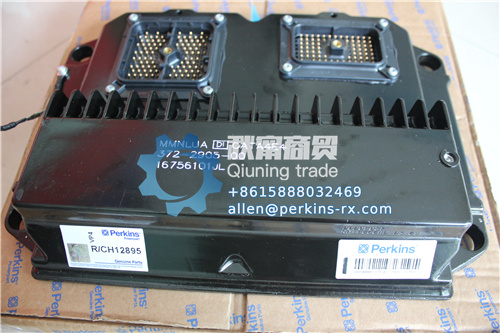
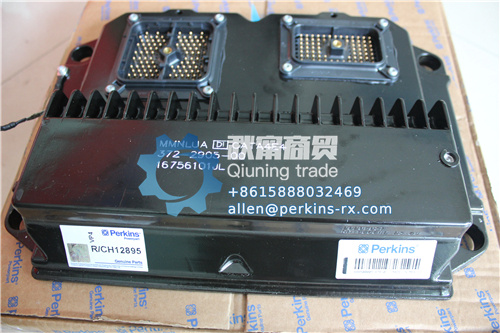
The "Intelligent Control Center" of the Engine - CAT ECM3722905 Electronic Control Module
In the engine operating system, the Electronic Control Module (ECM) is the "intelligent core" that receives, processes signals, and issues commands. Its computational accuracy and anti-interference ability directly determine the engine operating efficiency, timely fault warning, and fuel economy. CAT ECM3722905, with "original factory level system collaboration" and "full scene stable control" as its core, has become a reliable control center for CAT equipment. Its value lies not only in "parameter adjustment", but also in its dual role of "intelligent control of fuel efficiency and fault prevention".
As an original CAT accessory, its interface protocol, computational logic, engine sensors, and actuators are fully synchronized (specific compatible models can be consulted with customer service). The shielding design optimized through original electromagnetic compatibility testing can filter out interference signals from strong electromagnetic environments of equipment (such as motors and solenoid valves) (data error ≤ 0.3%), avoiding "command delay" (such as slow power response during rapid acceleration of loaders) or "parameter misalignment" (fuel consumption increase of more than 8%) caused by adaptation deviation of general modules. This native collaboration enables real-time matching of control commands with engine operating conditions, reducing system failures caused by imbalanced regulation from the source.
Material and design focus on complex scenarios: The shell is made of flame-retardant engineering plastic (resistant to short-term high temperatures of 120 ℃), and the internal circuit is coated with a moisture-proof layer (waterproof level IP6K9K), suitable for dusty construction sites and high humidity environments during rainy seasons; Built in shock-absorbing pad (resistant to 10G acceleration vibration), maintaining stable operation even during bumpy operations of construction machinery. Intelligent algorithms support adaptive adjustment (such as automatically optimizing fuel injection pulse width during low-temperature start-up), adapting to different altitudes and load scenarios, reducing manual intervention.
The implicit value is reflected in multiple dimensions: precise fuel control improves fuel efficiency by 6% -8% (reducing operating costs); Real time diagnostic function (early warning of sensor abnormalities) reduces sudden shutdowns (maintenance costs reduced by 40%); Stable output makes engine emissions more compliant (meeting environmental requirements on construction sites). If the module fails, it can cause power fluctuations and fuel consumption spikes, and in severe cases, it can lead to actuator misoperation (such as excessive fuel injection causing carbon buildup in the cylinder), significantly increasing the complexity of maintenance.